Skip to content

Blog

Partition shuffling

Up until a couple of days ago I still hadn’t tried out Windows Vista Release Candidate 1 which I downloaded a long time ago. Unfortunately, I discovered that the ethernet driver for VMware doesn’t work (and it used to in Beta 2), and so I was forced to wait until a convenient moment to install it on a physical machine (which wasn’t going to be my main desktop, funnily enough).

Windows Vista’s installer is still pathetically fussy about where it will allow you to install Vista. It requires installation to the first primary partition on a hard drive which is master.

Well, that’s really convenient, considering that my partition layout on the first hard drive on this machine was as follows:

Disk /dev/hda: 40.0 GB, 40060403712 bytes
255 heads, 63 sectors/track, 4870 cylinders
Units = cylinders of 16065 * 512 = 8225280 bytes

   Device Boot      Start         End      Blocks   Id  System
/dev/hda1   *           1        1912    15358108+  83  Linux
/dev/hda2            1913        1988      610470   82  Linux swap
/dev/hda4            3009        4870    14956515    f  W95 Ext'd (LBA)
/dev/hda5            4054        4870     6562521   83  Linux
/dev/hda6            3009        4053     8393899+  83  Linux

hda1 was my CentOS server installation, hda5 was a few gigs of data left over from somewhere else, and hda6 was my Ubuntu Dapper installation. Of course, the Windows install required the monopoly on hda1, which currently was occupied.

Well, thank goodness for the flexibility of Linux. I simply used the low level tool dd to make images of all the partitions (onto a spare 160 GB drive also in that machine), and then wiped off the disk.

One Vista install later, and the drive now had just one primary partition of rougly 17 GB with Vista on it.

I then created a partition to match the size of the CentOS install, and dd‘d the image back. After tweaking a few configuration files via the Ubuntu Live distro, I then rebooted with my GRUB bootloader CD in the drive, typed in the boot commands and CentOS booted like nothing had happened. 🙂

I then reinstalled GRUB to the hard drive (with a boot menu obviously, I don’t type boot commands every boot!) and added Vista to the list of OSs to boot.

The Ubuntu Dapper partition unfortunately would no longer fit (by about 2 GB), as Vista is now using a lot of the space, but instead I installed Edgy, and I’ll recover the important files off Dapper when I need them.

So after about half a day of partition shuffling, it now looks like:

Disk /dev/hda: 40.0 GB, 40060403712 bytes
255 heads, 63 sectors/track, 4870 cylinders
Units = cylinders of 16065 * 512 = 8225280 bytes

   Device Boot      Start         End      Blocks   Id  System
/dev/hda1   *           1        2040    16384000    7  HPFS/NTFS
/dev/hda2            2040        4870    22733220    5  Extended
/dev/hda5            2040        3952    15359384+  83  Linux
/dev/hda6            3953        3985      265041   82  Linux swap
/dev/hda7            3986        4870     7108731   83  Linux

hda1 is now Vista (NTFS), hda5 is CentOS, hda6 is Linux swap (for both) and hda7 is Ubuntu Edgy Eft.

The things I do to test Vista…
Getting Firefox 2.0 yourself on Linux screencast

I did a screencast yesterday of getting Firefox 2.0 yourself on Linux, at FOSSwire, which also features a lot of Linux/FOSS tutorials, tips, reviews, articles etc.

If you want to know how to install Firefox on Linux yourself, then this screencast is for you!

Watch it here.

Enjoy.

Flash Player 9 Beta 2 for Linux

Mammoth review of Mandriva Free 2007 – read!

I’ve just finished a mammoth sized review of Mandriva Free 2007.

Get reading!

Linux includes Microsoft patented stuff? Whatever you say, Sir Ballmer…

Steve Ballmer says:

“The fact that that product [Linux as an OS] uses our patented intellectual property is a problem for our shareholders. We spend $7 billion a year on R&D, our shareholders expect us to protect or license or get economic benefit from our patented innovations. So how do we somehow get the appropriate economic return for our patented innovation, and how do we do interoperability. The truth is, because of the complex licensing around the GPL, we actually didn’t want to do one without the other.”

I say:

Face it, Mr Steve. You’ve sold out and had to finally not only admit Linux is here to stay, but you had to do something about it. And go on, prove that FOSS violates your patents – give me some real evidence and I might be convinced.

Greed is a nasty human tendency, isn’t it?

UPDATE: It seems Ballmer really is off his rocker not in agreement with Novell on this, as this open letter from Novell tells us. I am slightly reassured.

BoxCheck for Firefox 2.0

If anyone wants to use BoxCheck (a Firefox extension that allows you to shift-click to select multiple tick boxes on web forms) on Firefox 2.0, I’ve updated it to make it compatible.

Note that this is hacked – all I’ve done is change the supported versions in the script to work with 2.0. It works for me, but if it eats your Firefox, don’t come complaining (execute FF with -safe-mode to remove it if it kills it).

You will have to add me to the list of allowed sites to install software, but don’t worry, it’s pure BoxCheck just with a hacked install file (you can verify for yourself, just Save Target As the .xpi, rename to .zip and explore it).


Tutorial on how to hack your favourite FF 1.5.x extensions to work with FF 2.0 coming soon.

GPL Java coming today

Apparently, Sun are announcing and releasing GPL’ed Java today (possibly at 16:30 my time, GMT, but I could well have done the conversion wrong).

This will be awesome and will hopefully not only strengthen Java as a platform as Linux developers move to Java and build cross-platform applications, but hopefully it will also get Linux working even better out of the box.

[via Scobleizer]

Novell respond to some questions on MS-Novell

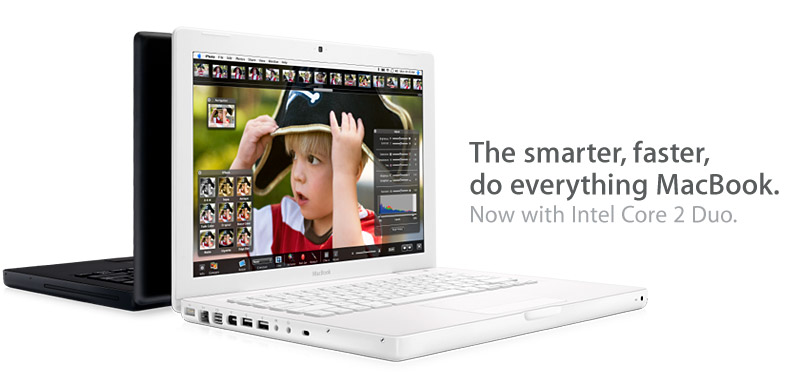
MacBook with Core 2

MacBook avec Core 2-ness!

Apple just upgraded the MacBook to Core 2 Duo. And I didn’t even realise the Core 2 did 64-bit either!

I want one.

But I also want Leopard, so I’ll see you in the spring, MacBook Core 2 Duo… with 64-bit Leopard and all my KDE apps running on top of OS X.

In completely unrelated news, I now officially consider myself a Linux geek as I successfully compiled my own kernel and got it to run on my spare machine under Ubuntu.

Beat that kernel name!Beat that kernel name! Hosted on Zooomr

The fact that the code is exactly the same as the vanilla 2.6.18.2 release is completely irrelevant and coincidental! 😛

The tutorial I used to build the kernel is here.

Are Microsoft evil?

Come on, you know what this is about.

But I’m really not sure where I stand on this.

On the one hand, there’s a chance that this could help FOSS and interoperability, but at the same time, Microsoft is a company. Companies want to make profit – as much of the damn stuff as possible; and MS will make more profit in a world without FOSS. I just can’t help thinking this is the first stage of embrance, extend and extinguish.

I really hope Novell aren’t stabbing the community in the back. Only time will tell, I guess.

I’ll certainly be listening to the Novell Open Audio on this subject, to hear their point of view.